Trump's Health: 'Heart of 65' Amid Skin Rashes and Bruises
The health of any prominent political figure invariably becomes a subject of intense public and media scrutiny, and for Donald Trump, nearing his 80th birthday in June, this focus is particularly sharp. Despite official medical reports frequently touting his "excellent health" and a "heart of a 65-year-old," visible skin rashes, recurring bruises, and other physical observations continue to fuel public speculation. This dichotomy between official assurances and noticeable physical signs has led to a recurring theme: the perceived silence or vagueness from his medical team, a sentiment encapsulated by the German phrase "Trumps Arzt schweigt" – Trump's doctor is silent. Understanding this ongoing narrative requires a closer look at both the disclosed medical reports and the visible observations that capture public attention.
The Latest Scrutiny: Rashes, Bruises, and Unanswered Questions
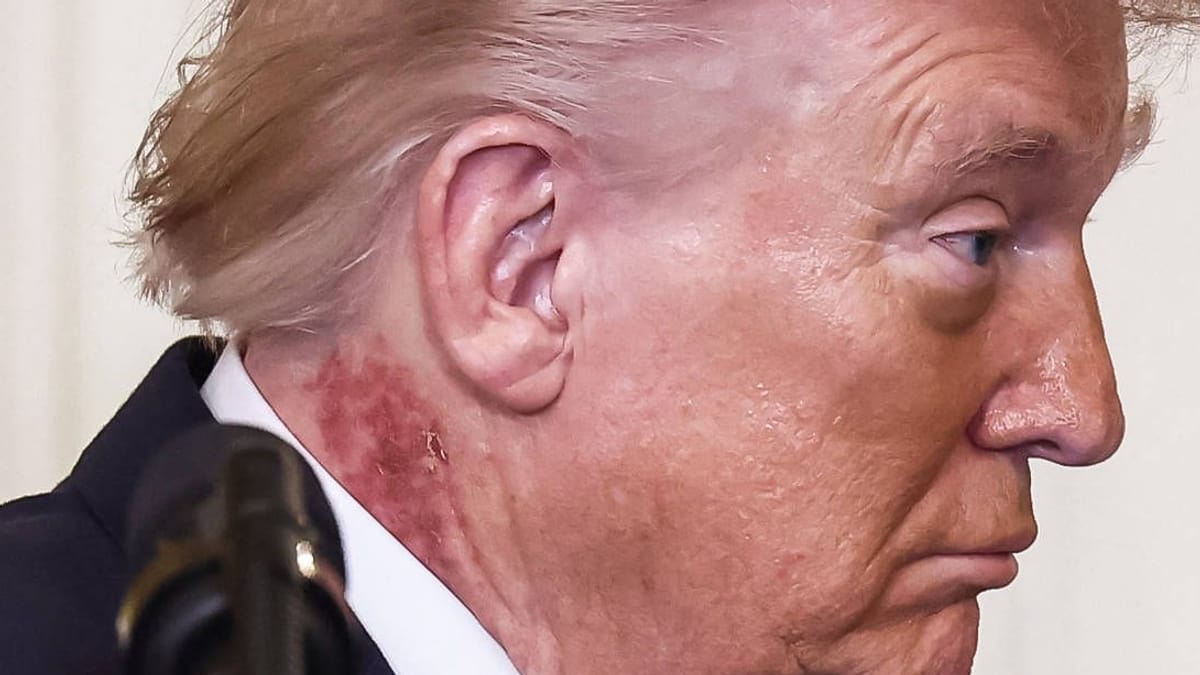
Recent observations have once again brought Donald Trump's physical health into the spotlight, sparking renewed discussions and curiosity. One of the most prominent recent incidents involved a noticeable reddish patch on his right neck. White House physician Dr. Sean Barbabella addressed this, stating that "President Trump uses a common cream on the right side of his neck to prevent skin irritations. It was prescribed to him by the White House doctor." While confirming the use of a prescribed cream, the official statement notably omitted the underlying cause or nature of the skin irritation itself, leaving the public to ponder the origins of the rash. The explanation continued, indicating that "the President has been applying the cream for a week, and the redness is expected to persist for several weeks," adding a timeline without full diagnostic clarity.
Beyond the recent neck irritation, Trump's hands have frequently shown bruises and discolouration, prompting a series of varied explanations from his camp. When blue spots appeared on his right hand, staff initially attributed them to vigorous handshakes. Later, it was reported that Trump began to use make-up to conceal these marks. More recently, a bruise on his left hand was explained by the 79-year-old himself as being caused by bumping his hand on a table, combined with his use of aspirin.
Another recurring observation has been frequent swelling in his legs. His doctors and advisors have attributed this to chronic venous insufficiency, a condition where leg veins struggle to effectively return blood to the heart. Furthermore, videos from public appearances have occasionally shown Trump with his eyes closed. While he has vehemently denied falling asleep, attributing these moments to relaxation or boredom, these instances further contribute to the public's perception of his overall vitality. The cumulative effect of these visible signs, coupled with often generalized or incomplete explanations, forms a central part of the ongoing public health discourse surrounding the former president. For a deeper dive into the specific incident of the neck spot and the medical team's response, readers can refer to
Trump's Red Neck Spot: Doctor Silent on Rashes and Health.
The Official Narrative: A 'Heart of 65' and Robust Health
In stark contrast to the visible signs and occasional vagueness, official medical assessments of Donald Trump have consistently painted a picture of excellent health. According to his personal physician, Dr. Sean Barbabella, following a comprehensive medical examination at the Walter Reed National Military Medical Center, Trump is in remarkably good shape. Dr. Barbabella's report concluded that "President Trump continues to enjoy excellent health," even going so far as to claim that at 79 years old, Trump possesses the "heart and vascular system of a 65-year-old."
The extensive health check, involving experts from various specialisations, reportedly found impressive results. The official report highlighted "unusually good laboratory values," "strong physical performance capacity," and confirmed that his metabolism, blood values, heart, and lung functions were all normal. Neurologically, he was also deemed sound. These findings suggest a physically robust individual, despite the general challenges associated with aging. Trump himself has often echoed these sentiments, downplaying concerns about bruises or venous problems as harmless and attributable to common activities like handshakes or medication use. This official narrative firmly asserts his continued fitness for the demands of public office, attempting to quell any lingering doubts about his capacity to serve.
A Legacy of Medical Opacity: Why `Trumps Arzt Schweigt` Matters
The pattern of limited and often euphemistic disclosures regarding Donald Trump's health is not a recent phenomenon but a longstanding characteristic of his public life, a reality that the phrase `Trumps Arzt schweigt` succinctly captures. For over a decade, statements from Trump, his doctors, and advisors have been described by critics, including the New York Times, as "scant, vague, or euphemistic." This consistent approach has created a perceived lack of transparency, raising questions about the full extent of his health status.
This history began notably in late 2015 when his longtime personal physician, Harold Bornstein, famously declared Trump to be "the healthiest individual ever elected to the presidency." Later, in 2018, White House physician Ronny Jackson claimed that Trump, with a better diet, could "live to be 200 years old." While these statements were highly laudatory, they often lacked specific details or were accompanied by a degree of hyperbole that fueled skepticism rather than providing clear, actionable information.
The significance of this medical opacity, particularly for a current or potential head of state, cannot be overstated. Public trust is paramount, and citizens have a legitimate interest in understanding the physical and mental fitness of their leaders. Clear, comprehensive health disclosures help ensure that leaders are capable of handling the immense pressures and responsibilities of their roles, including making critical decisions that impact national and international security. Without this transparency, speculation can fill the void, potentially leading to instability or doubts about a leader's capacity. The recurring theme of "Trump's doctor is silent" thus highlights a fundamental tension between the privacy rights of an individual and the public's right to know about the health of those who seek or hold the highest office. For more on the historical context of these vague disclosures, one can explore
Trump's Health: A Decade of Vague Medical Explanations.
Navigating Public Perception and Medical Realities
The public's perception of Donald Trump's health is often a complex interplay between official medical reports, visible observations, and the media's interpretation. On one hand, supporters and the campaign highlight the positive reports of excellent cardiovascular health and overall fitness for office. These reports, supported by seemingly comprehensive medical checks, offer reassurance that Trump possesses the stamina and mental acuity required for a demanding presidency.
On the other hand, the visible signs—rashes, bruises, and moments of apparent fatigue—along with the historical pattern of vague medical explanations, create a different narrative. These observations often lead the public, and particularly critics, to question the completeness of the official disclosures. It's a natural human tendency to reconcile what is seen with what is told, and discrepancies can foster doubt.
For individuals nearing 80, many health considerations become more prevalent. Conditions like chronic venous insufficiency, while manageable, are common. Skin irritations and bruising can also occur more easily with age. The challenge for public figures, and their medical teams, is how to communicate these realities without creating unnecessary alarm or inviting misinterpretation. Transparency, while maintaining appropriate patient privacy, is often key to building public trust.
*
Fact Check: Always cross-reference official statements with documented observations and independent analyses where possible.
*
Consider Context: Understand that aging brings certain common health challenges, and these don't automatically disqualify someone from public service if managed effectively.
*
Demand Clarity: For leaders, consistent and detailed health reports are crucial for informed public discourse.
Ultimately, navigating the information surrounding a public figure's health requires a critical approach, weighing both the professional medical assessments and the visible evidence against a backdrop of historical communication patterns.
Conclusion
The ongoing discussion around Donald Trump's health remains a fascinating study in public perception, medical transparency, and the unique challenges faced by high-profile political figures. While official reports consistently laud his excellent health and remarkable vitality, visible physical signs and a history of sometimes vague medical explanations continue to fuel public debate and curiosity. The recurring theme, accurately captured by the sentiment of "Trump's doctor is silent," underscores a desire for greater clarity and detail from his medical team. As he approaches a significant milestone birthday and potentially another presidential campaign, the scrutiny of his health will undoubtedly persist, serving as a reminder of the intricate balance between a leader's privacy and the public's right to comprehensive information.